


By the time you're lying in bed at midnight, the damage is already done. Your nervous system has been running hot since your 2PM deadline, your inbox, and the argument you replayed twice on your drive home. None of that shuts off just because the lights did.
This is the part most sleep advice skips. Sleep doesn't start at bedtime. It starts with how well your nervous system handled the entire day before it.
If you've searched for how to stop stress before it wrecks another night of sleep, wondered why you still can't fall asleep even when you're exhausted, or looked up whether magnesium actually helps you feel calm, the answer usually traces back to the same place. Whether you're after natural stress relief that actually works, a way to calm your mind before the 2PM slump turns into a full spiral, or the best supplements for sleep and anxiety that do more than just knock you out, here's what's actually going on.
How do I stop stress before it wrecks my sleep?
Cortisol builds throughout the day in response to deadlines, screens, and everyday friction. If nothing brings it back down before bed, your nervous system stays in a state built for staying alert, not winding down. Supporting your cortisol rhythm earlier in the day, not just at night, gives your body a real chance to power down when it's time to sleep.
Why can't I sleep at night even when I'm exhausted?
Being tired and being calm are two different states. You can run on empty and still have a nervous system stuck in high gear. That mismatch, exhausted body, wired brain, is one of the most common reasons people lie awake despite feeling worn out all day.
How do I calm my mind during the day?
Nervous system support isn't only a nighttime job. Ingredients like L-theanine and ashwagandha work during waking hours to support calm focus and healthy cortisol balance, which means less spiraling at 2PM and less residual stress carried into the evening.
What's natural stress relief that actually works?
The most effective natural stress support targets your body's actual stress pathways: cortisol regulation, GABA signaling, and nervous system balance. Adaptogens like ashwagandha, calming amino acids like L-theanine, and herbal ingredients like lemon balm all work on these systems directly, rather than masking stress with stimulants or sedatives.
What are the best supplements for sleep and anxiety?
Formulas that address both sleep and daytime stress tend to work across multiple pathways at once: GABA signaling for calm, cortisol balance for stress regulation, and nervous system relaxation for the transition into rest. A single-ingredient approach rarely covers all three, which is why multi-pathway formulas tend to outperform one-note solutions.
Does magnesium help you feel calm?
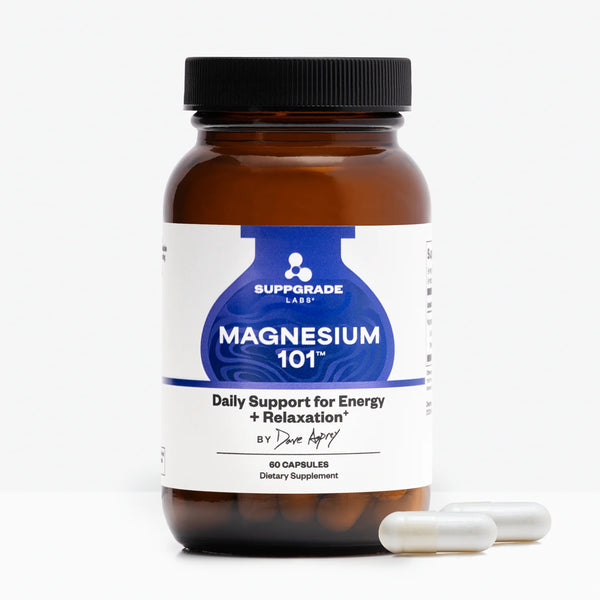
Magnesium plays a role in muscle relaxation and nervous system balance, both of which contribute to a calmer state during the day and deeper rest at night. The bisglycinate form, found in Quiet Mode and Magnesium 101, is bound to glycine for better absorption, which supports the body actually using the magnesium rather than losing it.
The 24-Hour Nervous System Connection
Your stress response doesn't clock out at 6PM. It runs continuously, which is why a formula built only for nighttime misses half the problem. Quiet Mode was formulated around this exact pattern: ingredients that give you support all day, not just after the lights go out.
What Works During the Day vs. at Night
| INGREDIENT | DAYTIME EFFECT | NIGHTTIME EFFECT |
| L-THEANINE | CALM FOCUS | RELAXATION |
| PHARMAGABA | STRESS REDUCTION | SLEEP ONSET |
| LEMON BALM | NERVOUS SYSTEM CALM | SLEEP QUALITY |
| MAGNESIUM | MUSCLE RELAXATION | DEEPER SLEEP |
| ASHWAGANDHA | CORTISOL BALANCE | SLEEP SUPPORT |
Notice the pattern. Nearly every ingredient contributes to both sides of the clock. Your nervous system doesn't separate "daytime stress" from "nighttime sleep." They're the same system, working around the clock, which means the support should be too.
New to Suppgrade Labs: Quiet Mode
Quiet Mode is non-melatonin, built for people whose bodies don't respond well to a hormone-based approach, which means less risk of morning grogginess or disruption to your natural sleep cycle. Instead of sedating you into sleep, it works on supporting healthy cortisol levels and stress responses, the actual reason most people struggle to wind down. Your body unwinds and relaxes on its own terms rather than being knocked out.
That support comes from five distinct pathways working together:
| PATHWAY | INGREDIENT(S) |
| BRAIN RELAXATION | L-THEANINE |
| GABA SIGNALING | PHARMAGABA®, APIGENIN |
| HERBAL CALMING | LEMON BALM EXTRACT |
| STRESS RESPONSE | SENSORIL ASHWAGANDHA, NUTRIPS® |
| NERVOUS SYSTEM RELAXATION | MAGNESIUM BISGLYCINATE |
How to Use It
Take 2 capsules during the day to support calm and take the edge off a stressful afternoon. Take 4 capsules 30 to 60 minutes before bed to support deep, restorative sleep. Same formula, two jobs.
The Bottom Line
If you've been treating stress and sleep as two separate problems, that's likely why neither one has fully resolved. Your 2PM spiral and your midnight brain loop come from the same overactive nervous system. Quiet Mode was built to support that system around the clock, not just at bedtime.
FAQ
What causes daytime stress to affect sleep at night?
Cortisol and nervous system activity carry over from day to night if nothing supports your body's ability to regulate them. An unresolved stress response during the day often shows up as a racing mind at bedtime.
Can the same supplement help with both stress and sleep?
Yes, when the formula targets nervous system pathways like GABA signaling and cortisol balance rather than relying on a sleep-only hormone. Quiet Mode is built for exactly this dual use.
Is magnesium good for calming anxiety?
Magnesium bisglycinate supports muscle relaxation and nervous system balance, which contributes to a calmer state during stressful moments and supports the wind-down process at night.
What's the difference between stress relief supplements and sleep supplements?
Traditional sleep supplements often rely on a single sedating ingredient for nighttime use only. Stress-focused, multi-pathway formulas support the nervous system throughout the day, which tends to improve nighttime sleep as a result.
How many capsules of Quiet Mode should I take during the day?
2 capsules during the day supports calm focus. 4 capsules taken 30 to 60 minutes before bed supports sleep.
Your nervous system runs on a 24-hour schedule. Quiet Mode was built to match it. Shop Quiet Mode from Suppgrade Labs.