




The Sleep Question Worth Asking
You've tried the sleep hacks. Blue light glasses. Magnesium. Melatonin. Maybe even a weighted blanket. And you're still staring at the ceiling at 1am wondering why your brain won't shut off.
Here's the question most sleep advice skips entirely: what if sleep isn't the problem?
What if your cortisol is?
What Cortisol Actually Does at Night
Cortisol is your body's primary stress hormone. In a well-functioning system, it follows a natural rhythm: high in the morning to drive alertness and energy, low at night to allow your nervous system to wind down and sleep to begin.
The problem is that modern life has made that rhythm almost impossible to maintain.
Screens past 9pm. Back-to-back calls. A nervous system that spends most of the day in a low-grade fight-or-flight state. The result: cortisol stays elevated when it should be dropping, and your brain stays active when it should be powering down.
This is why you can be completely exhausted and still wide awake. Your body is tired. Your cortisol didn't get the memo.
Why Melatonin Doesn't Fix a Cortisol Problem
Melatonin is a darkness signal, not a stress signal. It tells your body the sun has gone down. That's about all it does.
When elevated cortisol is the reason you can't sleep, introducing melatonin doesn't address the root cause. It sidesteps it. Which is why so many people take melatonin, fall asleep, and still wake up at 3am with a racing mind. The cortisol loop never actually closed.
And then there's the morning after. Exogenous melatonin can suppress your body's own production over time, which means groggy, foggy mornings that cost you the next day.
Cortisol-driven sleeplessness needs a cortisol solution.
The GABA Connection
Alongside cortisol, GABA is one of the most important pieces of the sleep puzzle that rarely gets talked about.
GABA is your brain's primary inhibitory neurotransmitter. Think of it as the biological brake pedal. When GABA activity is healthy, your brain can slow down, quiet the mental noise, and shift into the parasympathetic state where sleep becomes possible.
Chronic stress suppresses GABA signaling. So the more stressed you are over time, the harder it becomes for your brain to naturally downshift at night.
This is the biology behind "wired but tired." An exhausted body with a nervous system that has lost its ability to brake.
What the Research Points To
Several compounds have been studied for their ability to support cortisol regulation and GABA activity:
Ashwagandha (as Sensoril®) is one of the most researched adaptogens for cortisol support. Studies have found it helps the body manage stress load and supports a more balanced cortisol rhythm over time, particularly in people under chronic stress.
PharmaGABA® is a naturally fermented form of GABA shown to support alpha brain wave activity, the relaxed-but-alert state associated with the transition toward sleep.
Phosphatidylserine (as NutriPS®) has been studied for its role in helping blunt the cortisol response, particularly the kind triggered by mental and physical stress.
L-Theanine, found naturally in green tea, supports calm alertness and has been studied for its ability to promote alpha brain wave activity without sedation.
Magnesium plays a foundational role in over 300 enzymatic processes, including those that regulate the nervous system and support GABA receptor function.
These aren't sedatives. They don't knock you out. They support the biology that makes sleep possible in the first place.
The Five Pathways That Matter
Most sleep supplements target one variable. The problem is that stress-driven sleep disruption is multi-dimensional. To actually move the needle, you need to address:
-
Cortisol load: helping your body regulate the stress hormone that keeps you wired
-
GABA signaling: supporting the brain's natural calm pathways
-
Nervous system activation: helping your body shift out of sympathetic overdrive
-
Herbal adaptogen support: working with ancient, studied botanicals that support stress resilience
-
Brain activity modulation: supporting the quieting of mental noise that keeps high-achievers awake
Single-ingredient solutions rarely work because the problem rarely has a single cause.
So Does the Sleep Hack Actually Work?
The honest answer: it depends entirely on what the hack is targeting.
If your sleep problem is cortisol-driven, melatonin won't touch it. If your nervous system is stuck in overdrive, a single adaptogen probably won't move the needle enough. If GABA signaling is suppressed from months of chronic stress, one magnesium capsule before bed is unlikely to fix it overnight.
What the research supports is a multi-pathway approach that addresses the actual biology of stress-driven sleep disruption rather than masking the symptom with a hormone.
The Suppgrade Labs Approach
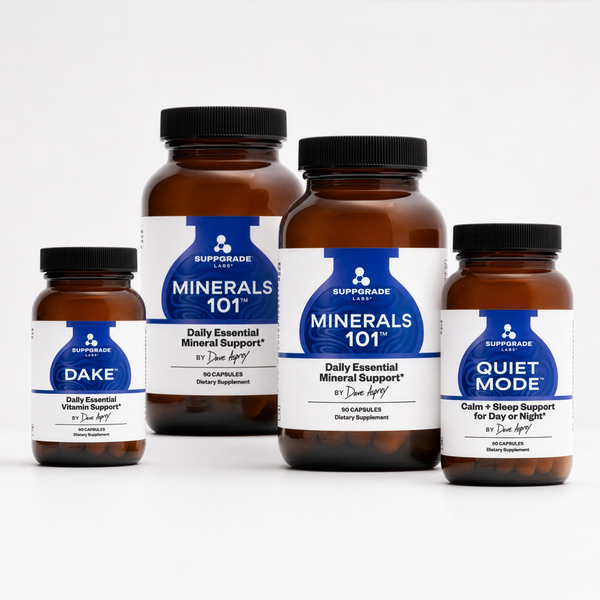
Quiet Mode was built on one premise: sleep problems are stress problems. The formula brings together seven clinically studied ingredients across the five pathways above, with no melatonin, no sedatives, and no hormone dependency.
2 capsules during the day to take the edge off. 4 capsules before bed to ease into deep, restorative sleep. Same bottle, both use cases.
No groggy mornings. No racing mind at 1am. Just a nervous system that finally gets the signal to power down.